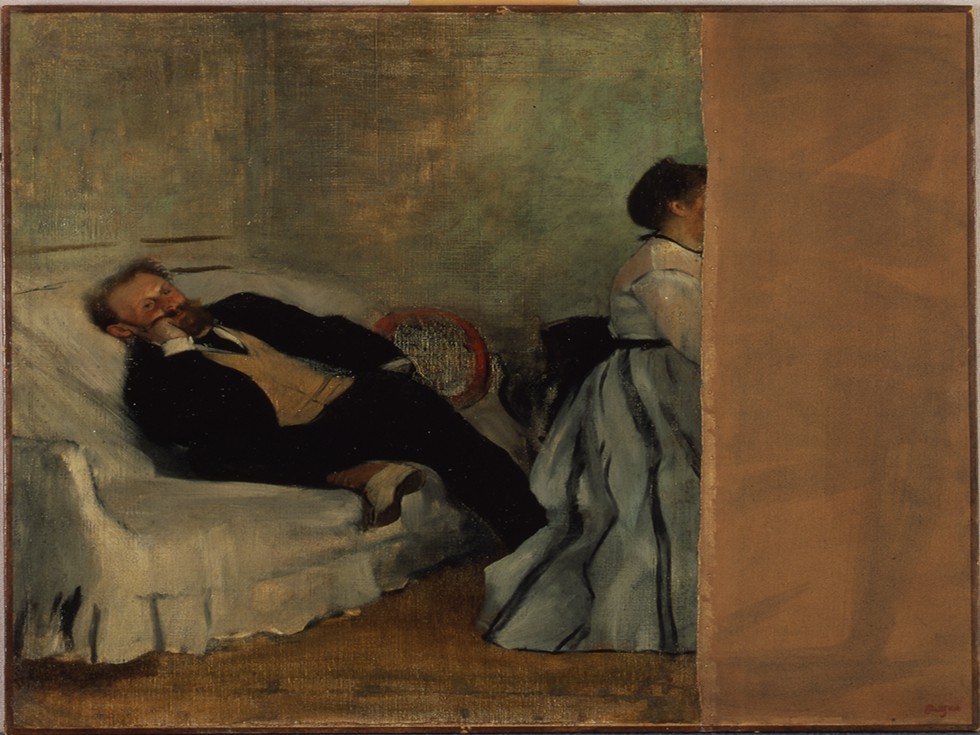
The Impressionist masters Edgar Degas and Édouard Manet first met while sketching at the Louvre. A shared artistic sensibility soon blossomed into a close friendship. Yet, one painting—Degas’s Monsieur et Madame Auguste Manet—became the turning point that strained their bond.
Now housed in the Kitakyushu Municipal Museum of Art, Monsieur et Madame Auguste Manet originally depicted Manet and his wife in an intimate domestic setting. Shockingly, the right half of the painting was later torn off by Manet himself, erasing the image of Madame Manet at the piano. Was Degas’s portrayal too truthful, touching a nerve in Manet’s private sensitivities? Or was it the depiction itself that proved unbearable? This enduring mystery in art history continues to fascinate, inviting viewers to approach the painting and ponder its unspoken tension.
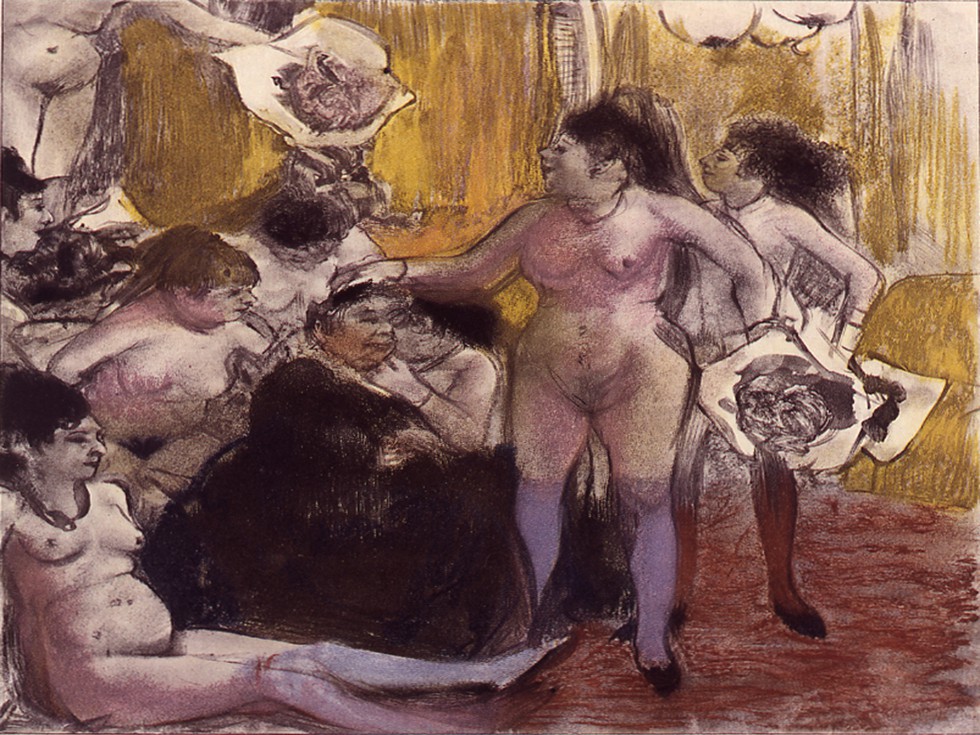
Beyond its dramatic backstory, Monsieur et Madame Auguste Manet also testifies to Degas’s mastery of portraiture and his keen ability to capture the atmosphere of 19th-century Parisian life. Through scenes of everyday existence, Degas chronicled both the upper and lower classes, often revealing the subtle dynamics between gentlemen and courtesans. His artistic focus resonates with the works of contemporary “master of French realism,” Guy de Maupassant, whose realistic tales—such as Boule de Suif and La Maison Tellier—laid bare the absurdities of human nature and the contradictions of social class.
Inspired by Maupassant’s narratives, Degas created a series of prints that transformed literary social critique into powerful visual language. With bold lines and daring compositions, he portrayed the female body and intimate interiors in ways that defied the classical ideals of beauty. Through his raw and unfiltered imagery, Degas exposed the hidden realities beneath the glittering surface of the modern city.