The Asian Art Biennial, organized by the National Taiwan Museum of Fine Arts, has been held biennially since 2007. In 2017, the Biennial was specially co-organized with the Asia University Museum of Modern Art. This edition of the Asian Art Biennale, titled “Negotiating the Future,” explores how art can serve as a medium to initiate and establish diverse relationships, challenge established thinking and social structures, and ask: Can art still transform society and create the future in contemporary times? The exhibition emphasizes the agency of art, highlighting balance and negotiation amid conflicts of power and relationships, reflecting Asia’s desire for change in an era shaped by technological and socio-political shifts.
The curatorial team comprises Kenji Kubota (independent curator, Japan), Ade Darmawan (Executive Director of the Jakarta Biennale and artist, Indonesia), Wassan Al-Khudhairi (curator, Iraq), and Hsiao-Yu Lin (researcher, National Taiwan Museum of Fine Arts). All three international curators are active in the global art scene: Kubota advocates for art as a means to awaken imagination and nurture the future; Darmawan emphasizes art’s engagement with the present, transforming reality to open avenues for critique and imagination; Al-Khudhairi views “negotiation” as a tool for exploring the future, dedicated to connecting art, the public, and communities through exhibitions.
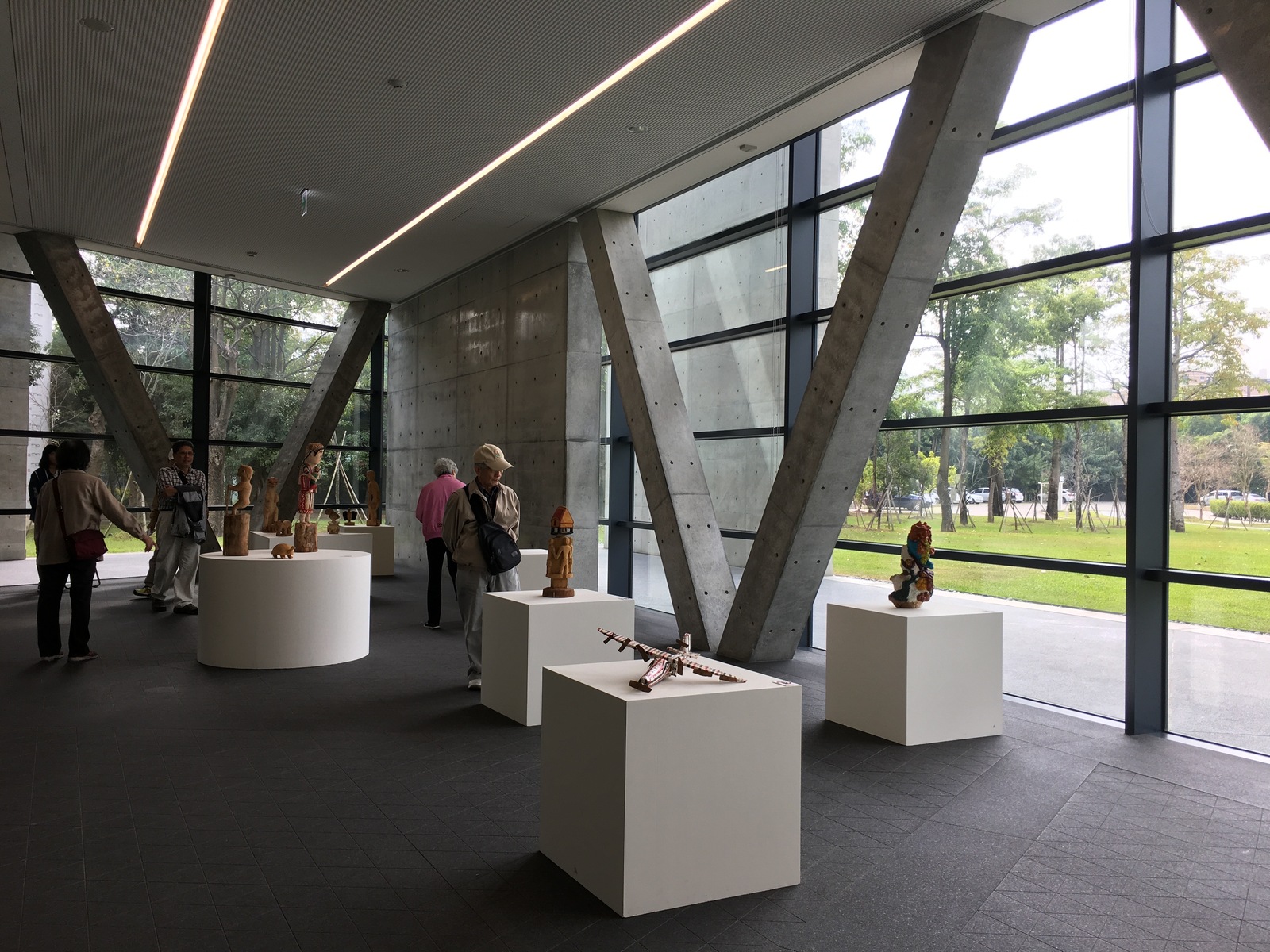
Through a diversity of curatorial perspectives and artistic practices, “Negotiating the Future” showcases the negotiatiing power of art and its capacity to imagine the future within contemporary Asian society. Jrai Dew by the Vietnamese artist group “Art Labor” is presented in Asia Modern. “Art Labor” has been conducting workshops, exhibitions, screening, gathering among Jrai villagers and experts in different fields such as anthropology, ethnohistory, literature, urban policies, sustainable entrepreneurship, to revive and promote Jrai wood‐carving culture. The work Jrai Dew discusses critically the cost of new economic society through mythic narratives. It takes inspiration from Jrai belief in the human and the cosmos. In their philosophy, being human is a part of the metamorphosis cycle of nature. After death, the journey back to their origin ends at becoming dew (ia ngôm in Jrai language) evaporating to the environment – the state of non‐being – the beginning particles of new existence. In this metaphorical context, forestland with its people is the vanishing dew, while a new existence of modernization and industrialization arises. By using products and symbols that either belong to the Central Highlands of Vietnam or related to the violent changes in history, Jrai Dew leads to a scene of human chaos however in a poetic and dreamy way.