Ting Yin Yung(1902–1978) was born in Maoming County, Guangdong Province. Having lived through the dramatic social upheavals from the late Qing dynasty to the early Republican era, Ting grew up in a time of intense clashes between tradition and modern reform. In 1920, he went to Japan to study at the Kawabata Academy of painting in Tokyo, and the following year entered the Western Painting Department of the Tokyo School of Fine Arts for advanced studies. After returning to China in 1925, he taught in Shanghai and Guangzhou, later becoming the Director of the Arts Education Department at China Art University under the support of TSAI Yuan-Pei. From 1929, Ting served for nearly a decade as the Director of Fine Art at Guangzhou Municipal Museum, laying the groundwork for his lifelong integration of Eastern and Western art.
During the Second Anti-Japanese War, Ting relocated to Chongqing, where he taught at the National Junior College of Art and, in 1945, co-founded the First Independent Art Exhibition alongside Lin Feng Mian, GUAN Liang, ZAO Wou Ki, and CHU Teh Chun. After moving to Hong Kong in 1949, he continued to teach at various universities for many years, profoundly influencing the art scene in southern China.
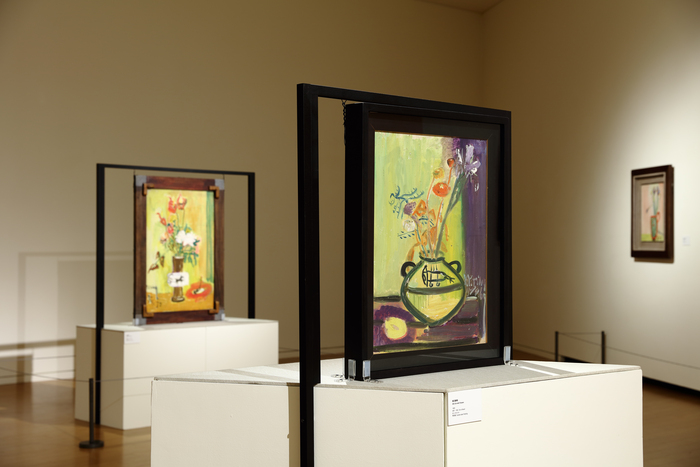
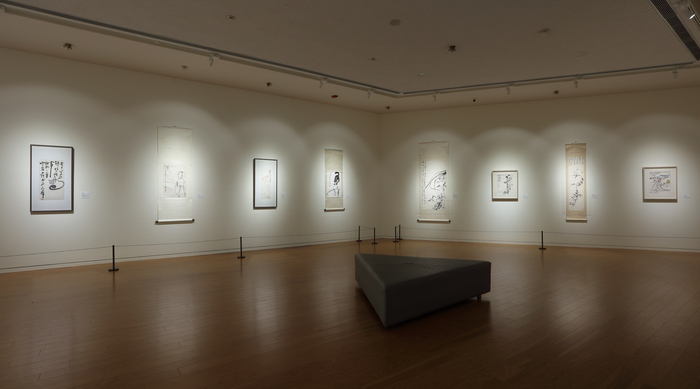
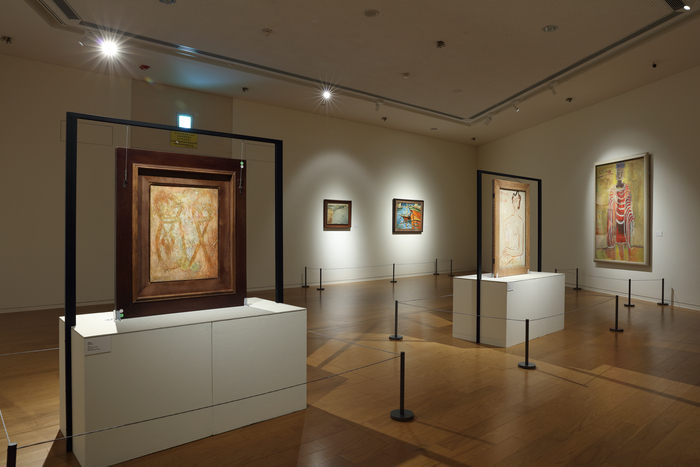
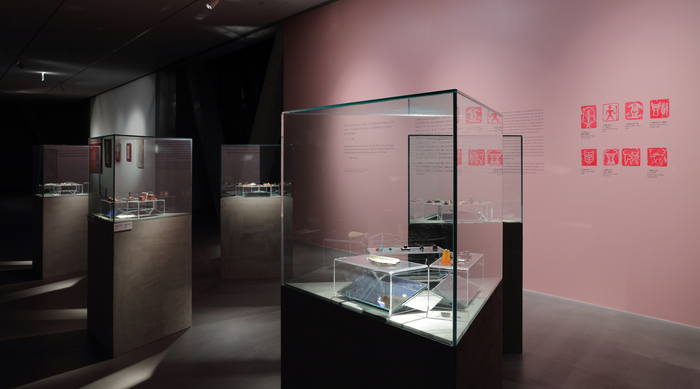
Deeply inspired by the minimalist brushwork of the Bada Shanren,Ting was also fascinated by children’s drawings and primitive art. He incorporated the unrefined beauty of ancient seals and calligraphy into both his ink paintings and oil works. By fusing the spontaneity of the Ecole de Cobra and the colorful aesthetic of fauvism of the 1950s with the vibrant colors of Fauvism, he developed a distinctive artistic language. His works are characterized by bold colors, simplified forms, and fluid calligraphic lines—expressing not only the visual vocabulary of modern art but also the essence of Chinese cultural heritage through his compositions and use of oracle bone and seal script motifs.
Throughout his lifetime, Ting Yin Yung exhibited extensively in China, Taiwan, and Hong Kong, as well as internationally in France, the United States, Japan, and Australia. As one of the most representative figures of postwar art blending East and West, he skillfully “drew from the past to enrich the present,” harmonizing Chinese and Western aesthetics to create a truly Chinese expression of modern Western painting.
📽️觀看展覽影片:

 勁筆野色—丁衍鏞回顧展_摺頁.pdf