
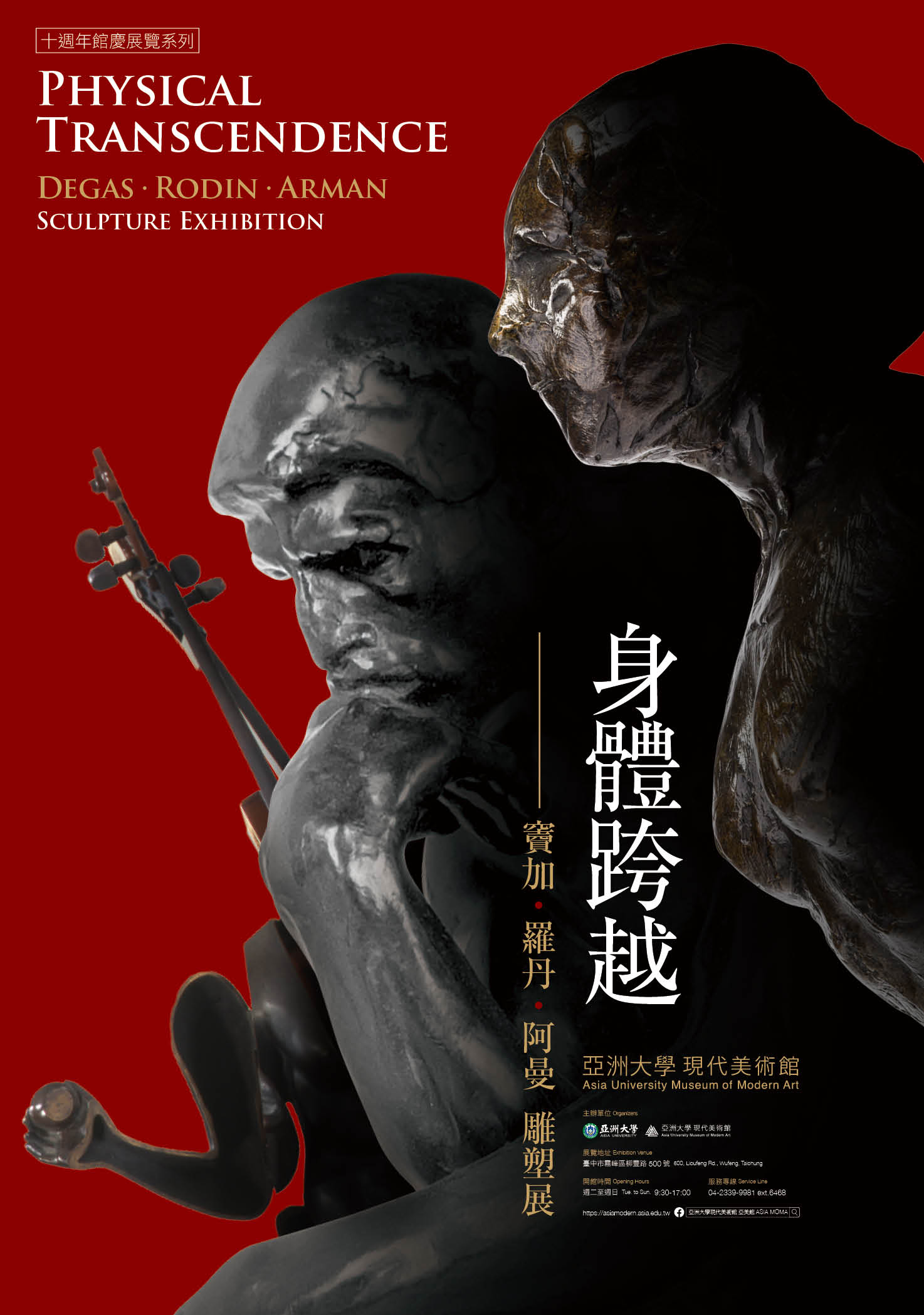
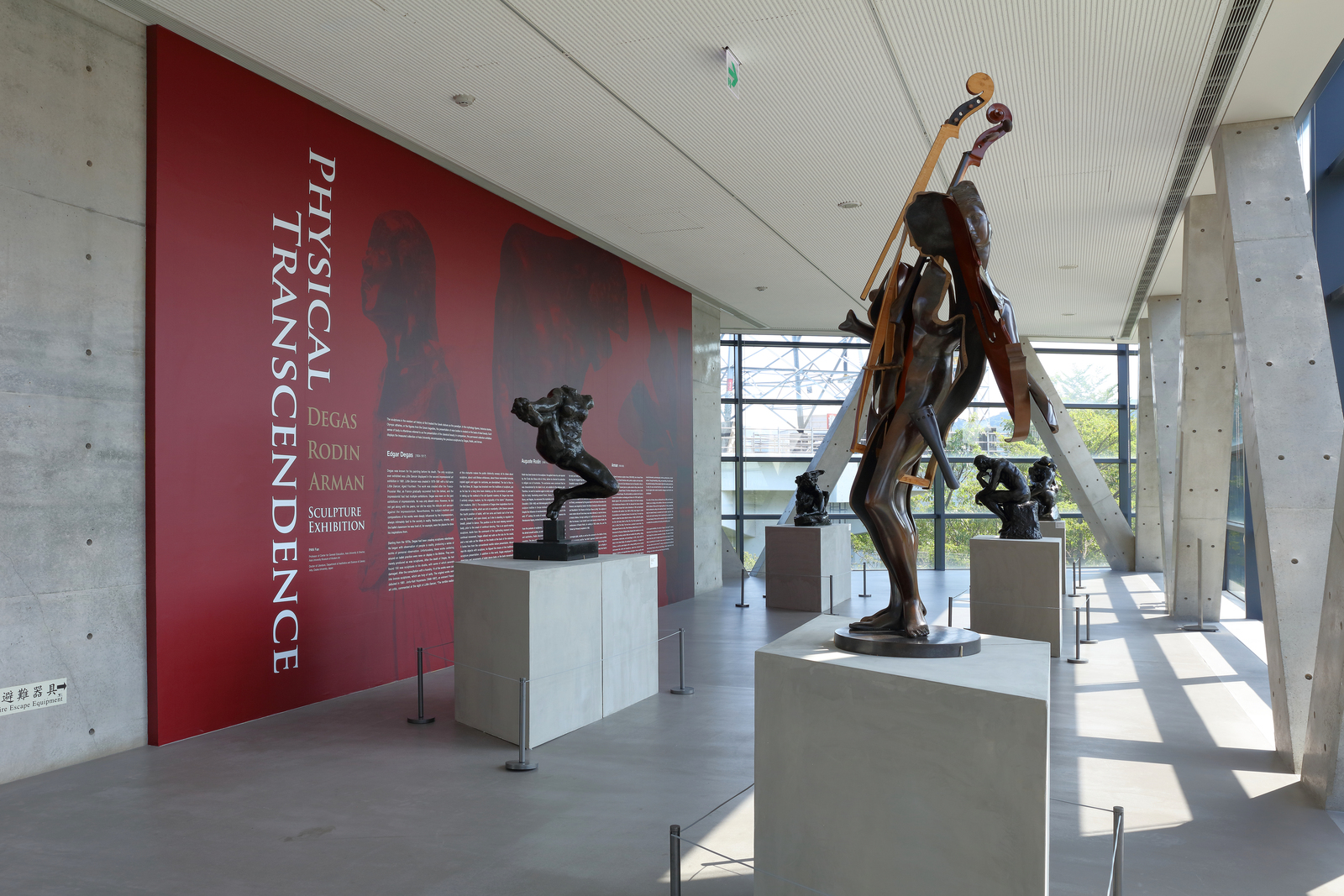
2023-10-25 ~ 2024-03-10 PHYSICAL TRANSCENDENCE: DEGAS.RODIN.ARMAN SCULPTURE EXHIBITION
In Western art history, the idealized human body of Greek sculpture long served as the model of classical beauty, celebrating mythological figures and heroes. This exhibition, drawn from the Asia University Art Collection, presents works by Edgar Degas, Auguste Rodin, and Arman to explore how sculpture evolved from the classical ideal toward the everyday, the real, and the modern.
Although best known as a painter, Edgar Degas (1834–1917) began experimenting with sculpture in the 1870s. His Little Dancer, modeled after a young ballerina and featuring a real silk tutu and ribboned hair, captures the intimate moment of the dancer’s breath and repose — so lifelike that it was once described as “uncomfortably real.” Rather than pursuing divine ideals, Degas focused on the body’s ordinary state. After his death, 150 of his wax sculptures were discovered, 74 of which were cast in bronze, solidifying his groundbreaking role in the history of sculpture.
Auguste Rodin (1840–1917), inspired by Donatello(1386-1466)and Michelangelo(1475-1564), rose to fame with The Age of Bronze (L'Âge d'airain1877), a work so realistic it was initially suspected of being cast from life. His monumental The Gates of Hell (La Porte de l'Enfer), based on Dante’s Divine Comedy (La divina commedia)and Baudelaire’s The Flowers of Evil(Les Fleurs du Mal), gave rise to such iconic figures as Adam, Eve, and The Thinker(Le Penseur). Through his expressive use of light, tactile surfaces, and unfinished textures, Rodin captured the tension and vitality of the human form in struggle, breaking from classical perfection to reveal the emotional and spiritual force of modern sculpture.
A key figure of Nouveau Réalisme (New Realism), Arman (1928–2005) was known for his accumulations, cuttings, and assemblages. Drawing on everyday objects such as musical instruments, furniture, and classical statues, he deconstructed and recombined them to reveal new humanistic meanings. In Venus au Violoncelle bois (1990) and Victoire en Chantant, Arman merges classical figures with musical instruments, creating a dynamic synthesis of movement and form that embodies modern sculptural aesthetics.
Together, these three masters illuminate sculpture’s radical transformation: Degas dismantled classical sanctity, Rodin infused it with tension and spirit, and Arman reassembled its fragments into new forms — tracing the art form’s multifaceted journey from the classical to the modern.




 PHYSICAL TRANSCENDENCE: DEGAS.RODIN.ARMAN SCULPTURE EXHIBITION-E-Worksheets.pdf
